About
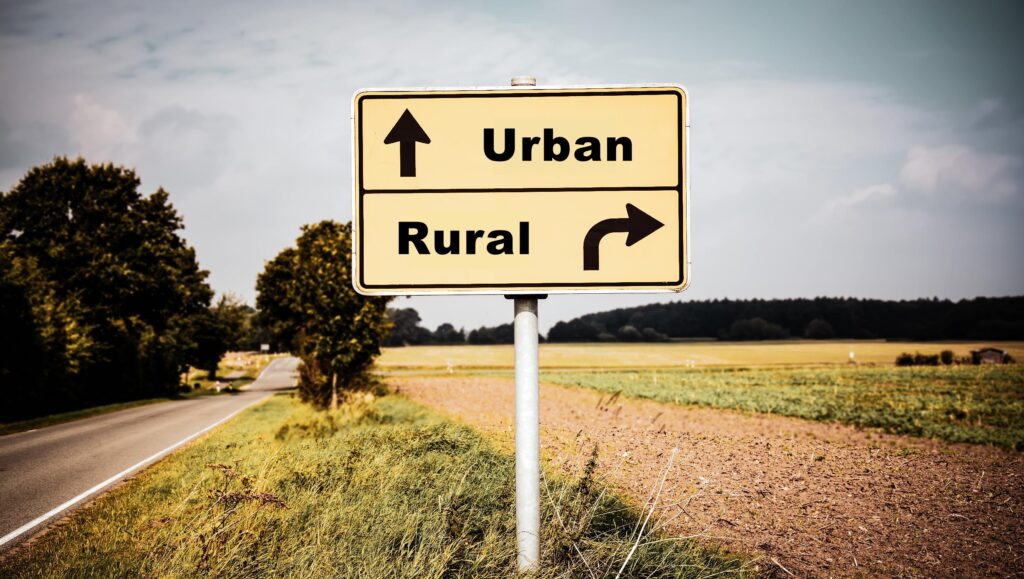
I have the Assessor of El Paso County, Colorado in 2021 to thank for bringing home to me the fact that urban residents and rural residents have starkly different views of their environments. Often to the detriment of rural residents, more densely-packed urban residents outnumber and outvote the more sparsely-populated rural residents who occupy a much larger area of their voting district, whether that be a county, state, or federal jurisdiction. For city and suburban issues, that’s likely not a problem. However, it can present grave consequences foisted upon rural residents and wild cohabitors of their surroundings when urban residents are ignorant of and fail to appreciate the impacts a proposition can have on rural residents, agricultural land, wildlife, and the natural environment.
Having lived for significant periods of time in small, medium-sized, and large cities, as well as in rural areas as far from cities as I could get, I have an understanding of and appreciation for both of those environments and ways of life. I’ve enjoyed the coziness of small town living; city-life benefits such as A Midsummer Night’s Dream performance on the grounds of a stunning city art museum, or a polo-ground symphony performance closing with Tchaikovsky’s 1812 Overture; living off-grid; and raising cattle for more than two decades. These varied experiences allow me to look objectively at issues affecting both urban and rural residents.
This website is born in an effort to demonstrate a life in the country to those unaccustomed to its natural beauty and quiet ways.
What happened in 2021 is this. For the second time in twenty years, Xcel Energy notified residents of eastern El Paso County of plans to run very-high voltage power transmission lines through our properties. The previous time, residents had banded together, hired an attorney, and persuaded Xcel to expand an existing right-of-way closer to Colorado Springs, instead.
My neighbors, who had been instrumental in that earlier successful effort, suggested that I resurrect their coalition to oppose this new proposal. After discovering that the previous organization had been disbanded, I started a new one on Facebook: Community Action Coalition of Colorado. Its website is communityactioncoalition.org. I didn’t want to limit our scope to just our county, and reached out to other groups in the eastern half of the state.
What was different with Xcel’s plan in 2021 was that the project was much larger: more than 560 miles of very-high voltage transmission lines in a huge loop encompassing the whole of eastern Colorado, which is shortgrass prairie, lying east of the Front Range. This is a $1.7- to 2-billion project to lay the infrastructure to, as one commissioner of the Colorado Public Utilities Commission stated, slather the eastern plains with wind and solar installations.
In a June 19, 2022 article authored by Mark Jaffe, The Colorado Sun reports the following:
“Over the next 10 years the electric grid in Colorado is going to be transitioning from thermal fossil fuel plants to largely wind and solar,” Colorado Public Utilities Commissioner John Gavan said at a recent session on climate change. “We are going to be slathering the Eastern Plains with wind and solar.”
“It’s our new cash crop”: A land rush for renewable energy is transforming the Eastern Plains, Mark Jaffe, The Colorado Sun, June 19, 2022.
Shouldn’t PUC commissioners be objective? Shouldn’t they weigh the pros and cons of any proposal after diligent feasibility and impact studies have been performed and documented in official reports? This project had just recently been announced. With such a biased project outlook, we residents of eastern Colorado could see that nothing would stop this project from “slathering eastern Colorado” with the trappings to provide Denver with electrical power. The best we could hope for would be to push for the lowest-impact routes, and for Colorado legislators to put in place protections for residents and wildlife. These goals require hard work on the part of those of us affected and who care deeply about our quiet, close-to-nature lifestyle.
The manner in which Xcel initially presented Colorado’s Power Pathway on their project website, it appeared to be just a very-high voltage transmission line. After the initial comment phase for residents to provide their input, it became evident that the transmission lines were just the beginning. That was when we became aware of the plan to “slather” our properties in huge industrial wind turbine installations. Mentions of solar installations at that time were, and still seem to be, more of an afterthought.
Most of us already were aware of adverse health impacts from power lines. Several of us worked to get more information about those impacts, as well as safe distances from the transmission lines to mitigate those impacts on health.
We learned of noise from the power lines – that they are not shielded, and that the more windblown sand and other debris pummel and pit the cables, the louder they get. I asked Xcel how far you’d have to be from the power lines to have their sound attenuate to 0 decibels. After repeatedly inquiring, I finally was told that the algorithm they use doesn’t calculate that far out; there was no answer to 0 decibels. What they tell you is that there’s a distance at which the noise gets lost in background noise. What they fail to understand is that our background noise can be 0 decibels. Most of the time, the only background noise we have is birdsong. This disparity in our concepts of background noise began to shed light on the broader disparity between urban and rural residents’ views of their environment.
The kicker was the reply I received when I asked our county assessor how much the transmission lines would decrease the values of properties in close proximity to those large power lines. In short, he told me that the transmission lines on Academy Boulevard and Woodmen Road in Colorado Springs had not significantly decreased values of neighboring properties. I knew Steve at a professional level, liked, and respected him. Our communication on this matter had been via email; I tried to reply to thank him, but was so floored by my reaction to what he had said that I couldn’t think of how to respond.
The comparison of rural El Paso County to the City of Colorado Springs is a more contrary one than the usual “apples to oranges” contrast. The city is so full of power lines that adding a new one can easily go unnoticed. It wouldn’t stand out visually, because each power line is only one of many. It wouldn’t be noticeably audible over the traffic noise and the general background hum and roar of the city. Of course, along the major corridors of Academy Boulevard or Woodmen Road, “just one more” of the same, even a new larger line, would have little-to-no visual, audible, or property value impact. How could I tell this to Steve, and still express my appreciation of his response, in a polite thank-you? Words failed me.
That is, words failed me until they came tumbling out in a post to our coalition’s group page. As an unknown entity, I have had little online impact, so when that post was shared more than 100 times in a couple of days, I took notice. It spread to other groups in the midwest, then to the east coast. The next day, it had been shared to groups on the west coast and Canada. Then, to Sweden. Other people across the country and beyond were relating strongly and emotionally to what I had said.
People living quiet lives in the country, who love where they live, feel unheard by those in positions of power who attempt to force incursions into agricultural and natural environments where those incursions not only don’t fit, but do damage. The belief that rural residents hold in common is that people in centers of political power, such as those in state capital cities, county metropolitan areas, and Washington, D. C., not only don’t understand rural life but also don’t care or perhaps realize that there is much to learn of rural life, and to appreciate.
City residents have a tendency to push city ways into rural areas, where they not only don’t belong, but may do harm. Lacking an appreciation for aspects of the close-to-nature experience embodied in rural living, its peace, and its fragility, city residents along with political and corporate leaders think it’s fine to put very-high voltage transmission lines, or industrial wind turbines, or wolves into areas where they, in the city, don’t themselves suffer from the adverse impacts.