Across the Greening Fields
This morning when I sat down at my desk, I looked out the window. This is what came out.
Across the Greening Fields
Across the greening fields and through a small gap in the windbreak of Rocky Mountain Junipers was a blur of granite grey clouds banked against the silvery blanket of an overcast sky. Framed just-so in the V formed by deep green junipers, a newcomer might have mistaken the sprawling and inverted-V of the dark clouds for a mountain peak and its broad shoulders.
Such there were, off in that direction. But not quite there, not that close, and not looming at such a distance. Indistinct as my vision was, I knew there was no such mountain there. Yet, I could see the darker evergreen-covered slopes of its lower reaches, and the grey, rocky talus above treeline. Even fog settling into a bowl between treeline and peak. The northern shoulder stretched Denverward until it became lost in misty dreams. The southward shoulder became obscured behind an elm past the garden pond.
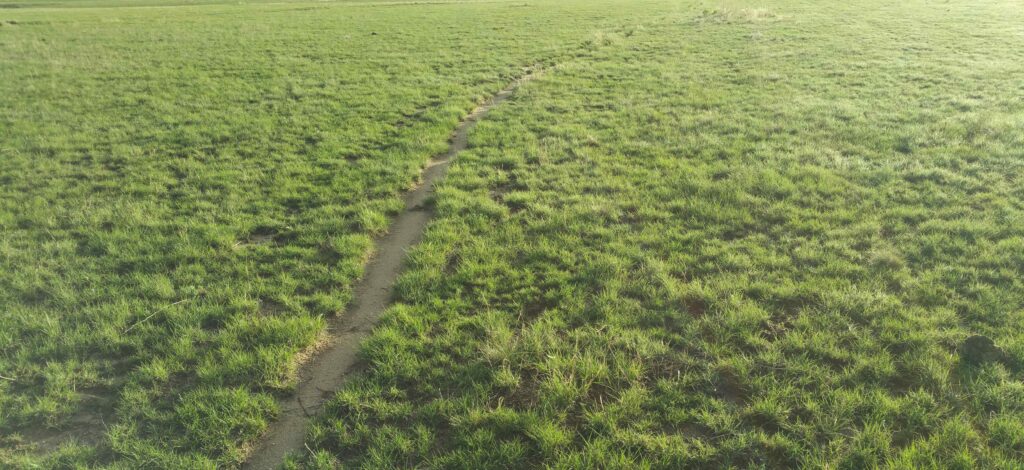
The whole was blurry, because I was wearing computer glasses as I typed. Still, my vision repeatedly wandered through the bank of windows across fields that hadn’t been green since the year before last. The change from ever-present brown was welcome and long overdue. Last year’s drought, out-of-season blizzards as summer came and went, and disease that ushered in the spring had taken its toll. Most of the Nanking cherry now were broken and dry. Their dark twigs, unadorned by the delicate pink blooms that normally accompanied late spring snows, would bear no vibrantly-tasty red fruit this summer. Spring green leaves of the Prairie Sky cottonwoods had become confined to half their height, yet now reached upward toward that for which they’d been named. Even some of the hardy Siberian elms and junipers had become bony skeletons against the soft green of fringed sage and blue grama fields. A house sparrow yesterday gathered flaking, wind-shredded bark into its beak from atop a cottonwood, presumably to take home for building its nest. A vicious late-May snowstorm last year had frozen and blown all of the year’s flowers from the fruiting trees and shrubs. Apples, lilacs, Nanking cherry, sour cherry, native American plum, buffaloberry, pea shrub, bush honeysuckle, chokecherry, even most of the skunk bush had been wiped clean of their reproductive efforts and been able to produce nothing. Only the ever-resilient golden currant had managed a crop of fruit.
One year, it appeared that a gallant robin must have steadfastly set himself atop his family’s nest of eggs in their home among the pines to guard them through such a blizzard. Usually providing sufficient shelter during summer weather, the single row of pines left nests too exposed during winds of double gale-speed. I found father robin bedraggled afterward at the south end of the house. Providing mealworms and fruit failed to entice and revive him, and I later found him lying among the trees in that warmest and sunniest of spots. He had had the richest and most melodious of songs, a true maestro among his breed. Such moments cause the tears to flow, and one’s mind to ask, “Why are you even here, in such a harsh land?”
When first I saw this gentle slope of abandoned field, it had called to me. In my vision, the field was not empty; following the contour of the slope, a future ranch-style house with a porch across the front nestled kitty-corner across the sward into the hill’s crest. It was as clear then as it is now, where I sit within. This place had called to me, and I had stayed. It must have beckoned long before I laid eyes upon it, now I think of it. I had been drawn here, perhaps forever. Why stay? Nature, in her harsher moments of Motherhood, pains one’s soul as a grain of sand pains the soft flesh of the oyster. The sympathetic outpouring of emotion into writing creates the pearl.
This place has its lighter moments – both of song, and of profound and utter silence. Rousing birdsong cheerily accompanies the rising sun to usher in a new day. Dewy peace on the heels of a warm afternoon thunderstorm prompts a tinkling chorus of horned larks to murmur lullabies to a setting sun. As darkness grows after the storm, awakened toads croak their endearments from a temporary pond. The muddied wake of their swimming ripples reflections of stars above. The bass of their love song is accompanied by the melody of a mockingbird, perhaps punctuated by the whoo-call of a Great Horned owl or the squawking bark of a fox.
Other times, nothing seems to stir. The stillness and total absence of sound is near-impossible to imagine until having experienced it. And I never had, until moving west. I think it doesn’t exist in the confines of the eastern states. How does wild life across miles of wild country conspire to make not a sound? How does nature, who sometimes whispers, yet other times roars with such might, just sit still? Capricious in her moods, what causes her repose? Is she sleeping? Merely dozing? Dreaming of days to come and nights to pass? Resting for the next big blow? Teasing? Or is it a game, waiting, watching, perhaps baiting? Or simply providing a respite? It is absolutely awe-inspiring to experience no movement, no sound. Not a breath of air stirs. In the midst of all of nature’s life and man’s encroachment, a moment in which to imagine none of it is present. Hush. Only you, yourself, exist. Cogito ergo sum.
The mountains, though. They’re magnetic in their magnificence. From a distance, they haunt us with their mysteries. We’re drawn to solve them, drawn to explore. And I had. The edge of a high mountain meadow near treeline had been a more comforting and inspiring home than my own city bedroom. Once there, we’re enraptured with their beauty, with the uniqueness found only in this particular range, the vegetation at this elevation, the view from this slope. Wildlife and sounds all can change within a short walk. We’re imbued with an invigoration we’ve felt nowhere else. Perhaps enchanted. Captivated by their charms, we want to never leave. And here, our imaginations dwell.
A blur on the horizon becomes a home one’s spirit never left.
PJ Reinbold
May 31, 2021